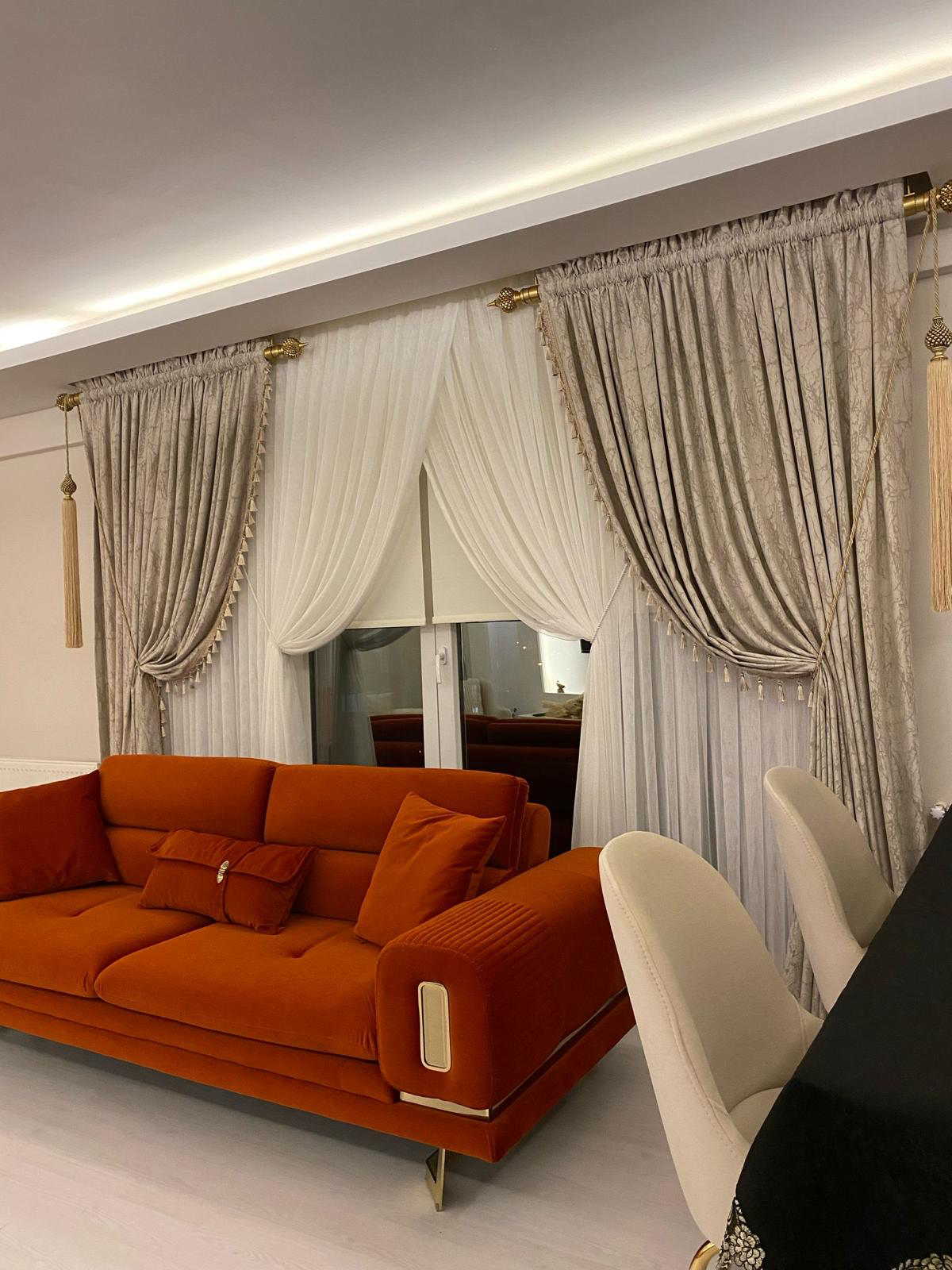
Curtain length changes the perceived height, softness, and polish of a room more than most homeowners expect. Even beautiful fabric can feel off if the hem lands in the wrong place.
Our rule at Charm Curtain is simple: start with the architecture, then choose the finish that supports daily life. A formal dining room can carry more drama than a busy family den, and a nursery asks for something different than a guest suite.
Why floor-length curtains feel more luxurious
Curtains that run to the floor visually extend the wall and create a cleaner vertical line. That extra length makes ceilings feel taller and windows feel more architectural, even in simple builder-grade rooms.
Because the hem completes the opening, the treatment reads as part of the room rather than as a separate accessory. That is why full-length drapery consistently feels more custom than curtains that stop awkwardly at the sill or just below it.
When curtains should float instead of touch
A slight float is often the smartest choice for homes with pets, kids, robot vacuums, or high foot traffic. It keeps the hem crisp and prevents everyday dust from building up at the base.
The key is restraint. Once the gap becomes visually obvious, the room starts to feel under-finished. We usually stay within a half inch so the drape still reads as intentional and tailored.
- Use a float in casual family rooms and breakfast areas.
- Choose it when the fabric is lightweight and prone to shifting.
- Ask for it when easy cleaning matters more than added drama.
Where puddling actually works
Puddled curtains can be beautiful, but they are a styling decision rather than a default. They suit romantic bedrooms, formal sitting rooms, or low-use spaces where the fabric can remain undisturbed.
We avoid heavy puddling in active households because the folds collect dust quickly and can make opening and closing the treatment less practical. A soft two- to three-inch break is usually enough if you want a more relaxed look without excess fabric on the floor.
The most elegant curtain length is the one that still works beautifully on an ordinary Tuesday, not only in a styled photo.
Measure from the rod, not the trim
One of the most common mistakes is measuring from the top of the window casing. Custom drapery is installed from the hardware line, and that hardware is often mounted higher and wider than the frame to create scale and bring in more light.
Before ordering panels, install or at least finalize the rod position. Then measure straight down to the finished floor at several points, since older homes can be subtly uneven.
- Confirm rod height and finial clearance first.
- Measure left, center, and right because floors are rarely perfectly level.
- Account for rings, clips, or track hardware that changes finished drop.
Our studio recommendation by room
For living rooms and primary bedrooms, we almost always recommend curtains that gently kiss the floor. It is the most versatile option and feels polished without becoming fussy.
For kitchens, bathrooms, and spaces with built-in benches or radiators, shorter lengths can still make sense. In those rooms, the architecture should decide the finish line rather than forcing a full-length treatment where it does not belong.
We can measure, sample, and style the room with you.
Our in-home consultations across Texas help you decide fabric, lining, hardware, and final drop with the room in front of us.
Should bedroom curtains always reach the floor?
Almost always, yes. Full-length curtains add softness, improve blackout performance when layered well, and make the room feel more complete.
Is it outdated for curtains to puddle?
Not outdated, but more selective. Puddling still works in romantic or formal interiors, though most modern homes benefit from a cleaner finish.
What if my floor is uneven?
Measure multiple points and hem to the shortest clean length or customize each panel. That small adjustment keeps the line visually even once installed.